Venom Custom
Venom Custom exists because a trigger job took a season too long. The shooter sent his gun out, waited a year of matches, and decided to learn the work himself.
THE MAKER
Don Fredenhagen did not set out to be a pistolsmith. He was a competitive shooter with a mechanic's background who did what shooters do: at the end of one season he sent a pistol out for a trigger job, expecting it back before the next one. The next season started. The gun did not come back. His own telling, on the shop's site, is plain about what happened next — he decided this was work he could do himself, started with his own guns, and word got out the way it always does at ranges.
Venom Custom LLC became fully licensed in 2018 and settled in Nashville, Tennessee. Every gun is designed and built in-house, and the shop's founding grievance is now its founding discipline: the company promises quality work, open communication, and delivery in a timely manner.
THE MACHINE
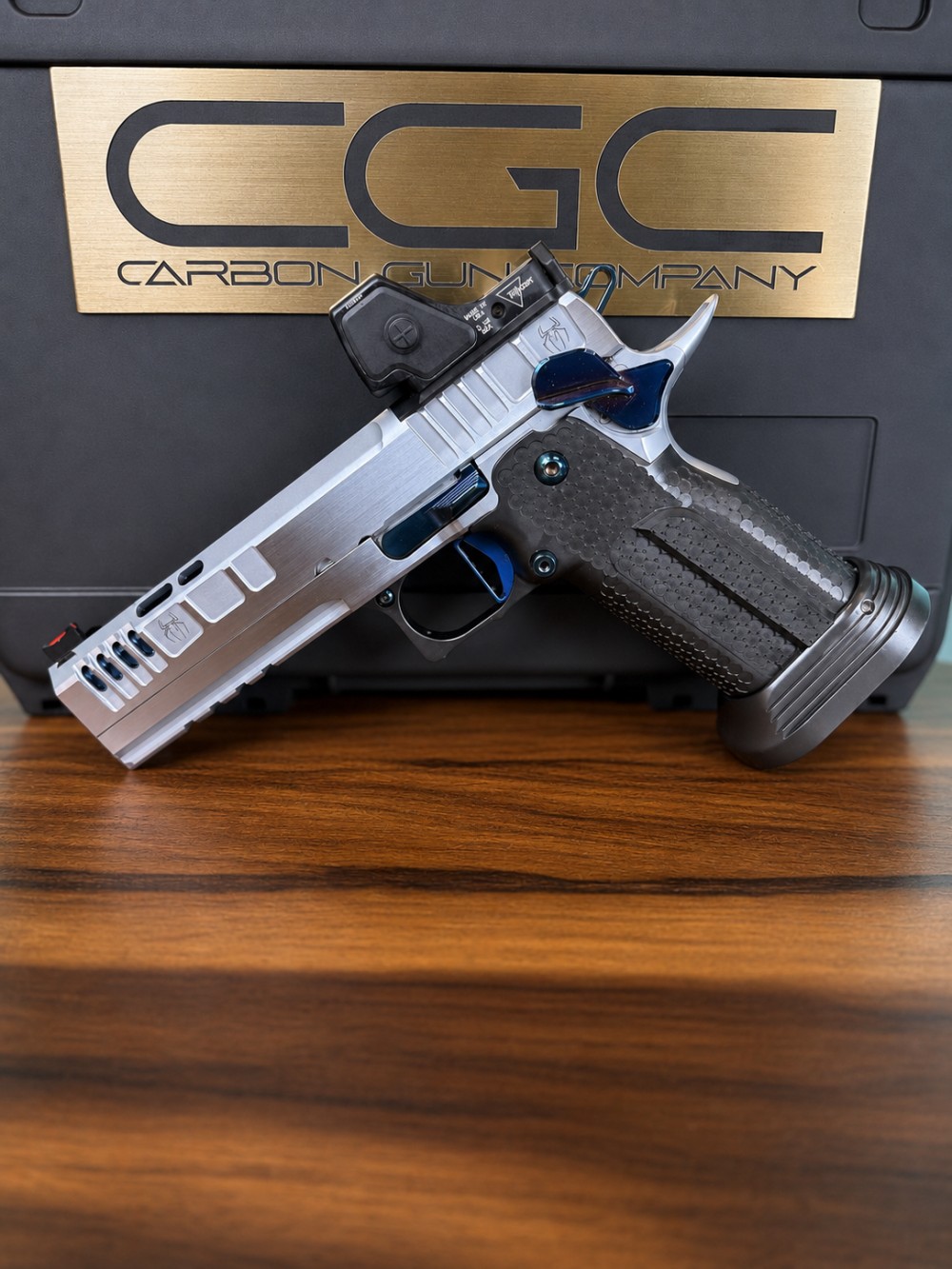
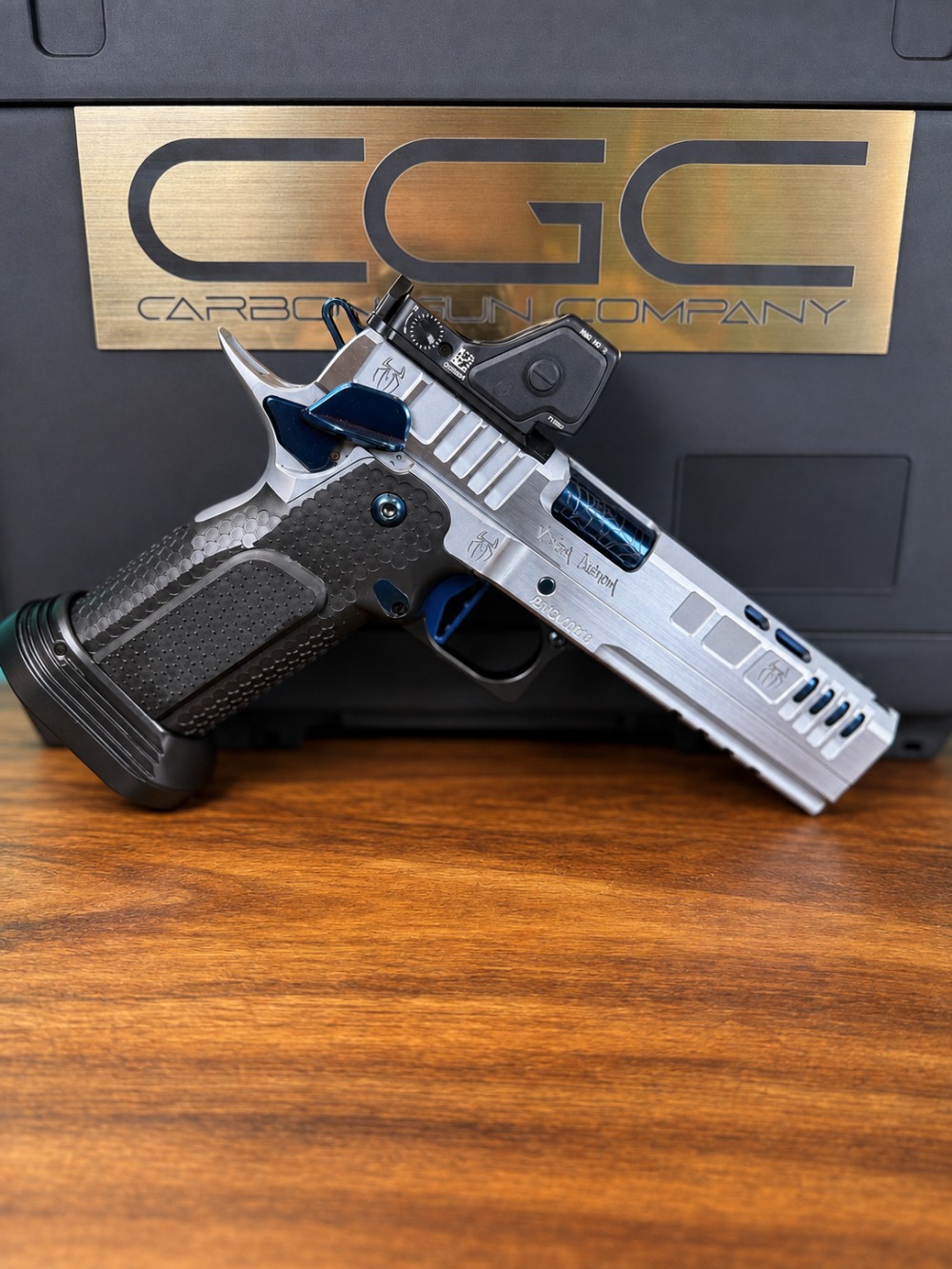
The focus is singular: the 2011 platform, for competition. Builds are released in limited runs rather than as a standing catalog — when a run opens, a small batch of guns is designed, built, and, per the shop's own description, competition-tested and shot before it ships. The guns wear the spider mark and a finish style you can read across a room: hard chrome against deep blue PVD, controls blended into the frame until the seams all but disappear.
Blending is the shop's visible signature. A grip safety, a magwell, a thumb safety — on a Venom these parts flow into the frame with their edges melted, so the gun reads as one object rather than an assembly. It is slow work with files and patience, and it cannot be hurried by a bigger shop: the run is the run.
THE MOMENT
Most custom shops start with a craftsman's dream. Venom started with a customer's complaint — its founder was the customer. A whole competitive season is a terrible price for a trigger job, and every shooter who has ever mailed a gun to a busy smith knows some version of that wait. Fredenhagen's answer was not a bad review. It was a federal firearms license and a machine shop.
There is a reason the story is the shop's official biography, printed on its own About page: it is also a promise. The man who lost a season to somebody else's backlog now runs the backlog, and the guns ship shot, tested, and on time — because he remembers exactly what the alternative costs.