Alchemy Custom Weaponry
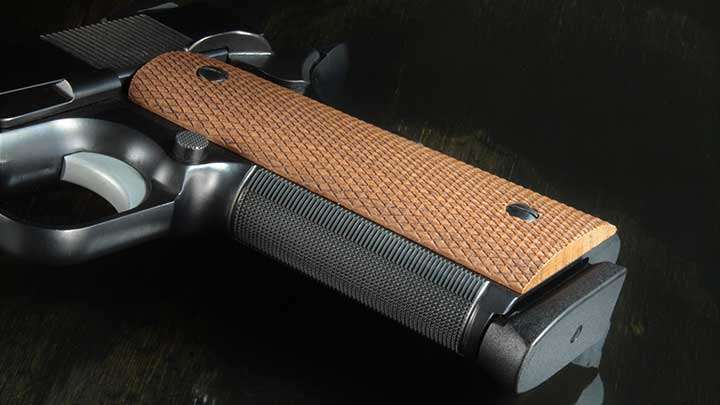
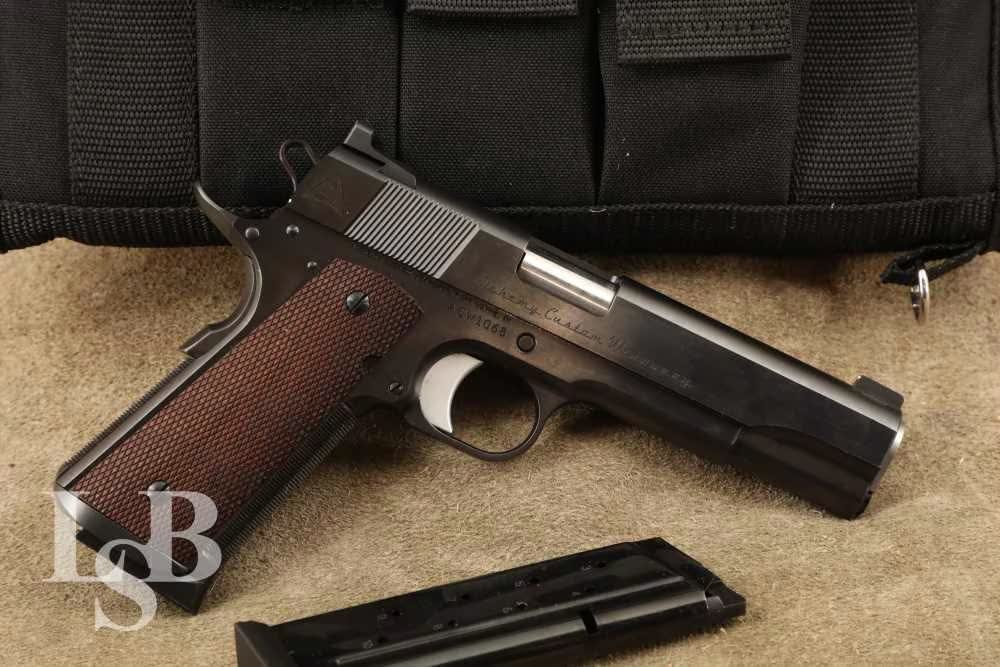
ACW builds the 1911 the old way on purpose — hand-fit, deep-blued, hand-checkered — in the same Fort Wayne building where Cabot machines its space-age guns.
THE MAKER
Alchemy Custom Weaponry was founded by Rob Schauland, a pistolsmith who served his apprenticeship in two of the most demanding classrooms in the business: he worked in Springfield Armory's custom shop, rising to assistant director, and then at Les Baer Custom, before starting ACW in 2011. His specialty was never volume. It was the old school: hand-fit slides, hand-cut checkering, deep traditional bluing.
In the mid-2010s Cabot Guns acquired ACW — largely, as the story is told across the industry, to bring Schauland himself in-house — and the brand relaunched in 2017 out of Cabot's Fort Wayne facility, where it operates as Cabot's traditional division. Schauland has since moved on to build under his own name, but the shop he founded still builds his way, and American Rifleman puts its output at fewer than 1,000 pistols a year.
THE MACHINE
The flagship is the Prime, and its dressed-up sibling the Prime Elite: full-size Government-model 1911s built the way the great postwar smiths built them, with hand-fitted major components and an accuracy guarantee of 1.5 inches at 25 yards. Schauland gave the design language a name borrowed from the classic-car world — Resto Mod: the silhouette and manners of a vintage 1911, quietly modernized where modern is better, in the sights, the safeties and the details your hand actually touches.
The range rounds out with the Quantico, a railed model with the flavor of the FBI Hostage Rescue Team's famous 1911s, and the Quantico HiCap — ACW's step into double-stack territory at 17+1. Even the HiCap keeps the house style: it looks like a 1911 that wandered forward in time, not a race gun that wandered back.
THE MOMENT
The strangest and best fact about ACW is its address. Under one roof in Fort Wayne, two divisions build the same basic pistol by opposite philosophies. Upstairs in spirit: Cabot, machining parts to aerospace interchangeability, clones of clones. Down the hall: Alchemy, hand-fitting each slide to each frame the slow way, cutting checkering a file-stroke at a time.
Most companies would call that a contradiction. Cabot calls it a portfolio — and for a student of the 1911 it is a gift, because the two approaches can be compared gun to gun, in the same building, by the same parent company. The argument between the file and the CNC mill is a hundred years old. Fort Wayne is where both sides currently live.