Chambers Custom
Joe Chambers measures slide fit in ten-thousandths, test-fires every PHAT WMG 500 rounds before it ships — and names his flagship PHAT: Pretty Hot And Tempting.
THE MAKER
Joe Chambers opened Chambers Custom in Crete, Nebraska, on June 1, 2010 — but the education started earlier. From 2007 to 2010 he apprenticed under Bob Marvel, one of the most respected pistolsmiths in America, and competed along the way: his own biography counts dozens of class championships at the National Matches at Camp Perry. He built his name the competition way, one measured gun at a time.
The shop's obsession is geometry. Chambers publishes the number other builders keep vague: on his WMG pistols the slide-to-frame fit is held to 0.0002 inches — two ten-thousandths. A human hair is roughly ten times thicker. The point of that precision is not bragging rights; a slide that travels on truly parallel rails wears evenly, runs consistently, and keeps doing both for a very long time.
THE MACHINE
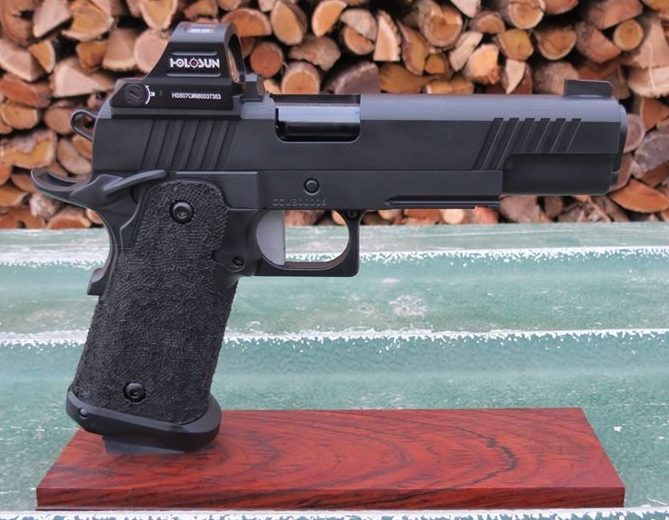
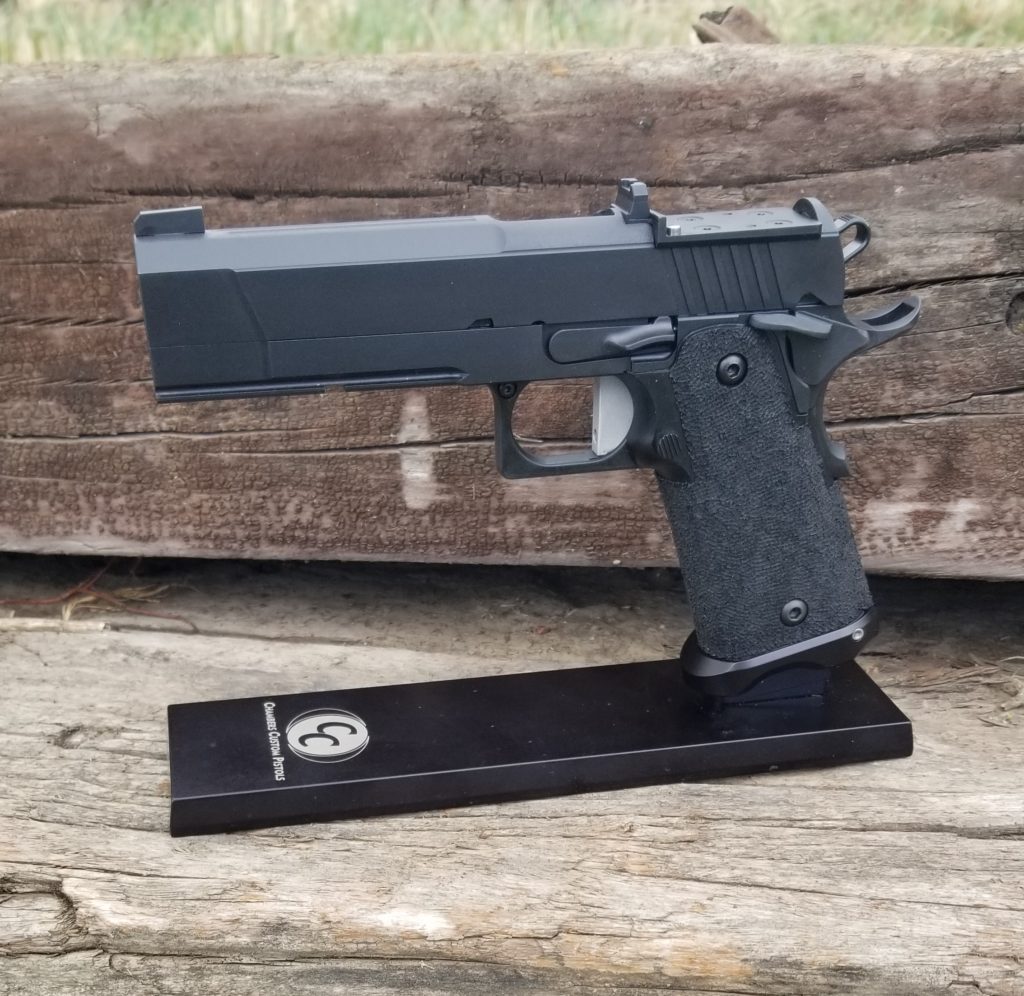
In 2019 Chambers launched the line that made the shop famous beyond the bullseye world: the PHAT WMG, a wide-body 2011 in 9mm or .38 Super. WMG stands for Working Mans Gun, and the concept is deliberately un-custom: one configuration, matte black, no options menu, engineered for people who carry a gun for a living. The variants tell the story — the WMG itself, the PHAT WMG-R, and the Night Fighter and Light Fighter, designed with input from instructor Chuck Pressburg for law-enforcement and military users.
Output is small — on the order of 25 to 50 PHAT WMG pistols a year — partly because of what happens before one ships: every PHAT WMG is test-fired at least 500 rounds. Not a magazine. Five hundred rounds, through the gun you ordered, before it leaves Nebraska. Reliability on a Chambers gun is not a hope; it is a round count already on the frame.
THE MOMENT
The build that shows the shop's range is a pair: Lefty and Righty, a matched set of 1911s Chambers built as mirror images of each other — one for the left hand, one for the right, controls, ejection and detailing flipped gun to gun. The pair landed on the cover of American Handgunner, which is roughly the pistolsmithing equivalent of a magazine cover in any other craft.
Put the pair next to the PHAT WMG and you have the whole shop in one frame: a smith who can build a one-off mirrored art piece for a magazine cover, then go back to building matte-black working guns measured to two ten-thousandths of an inch.