Stan Chen
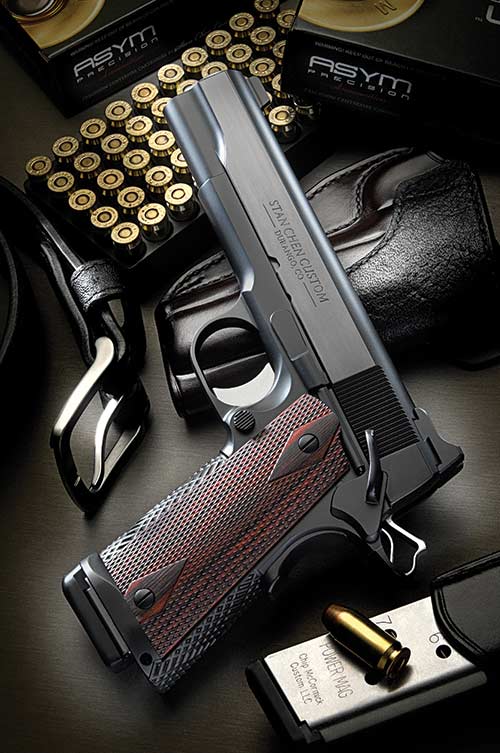
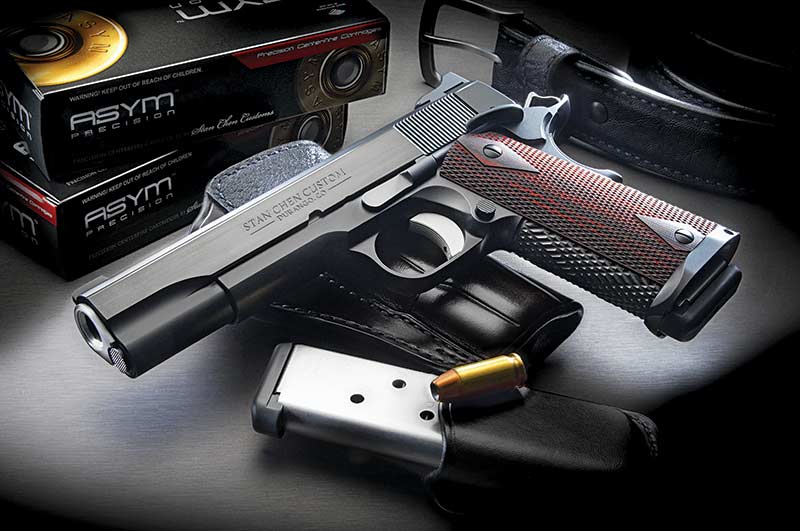
Stan Chen quit a corporate career at nearly thirty, spent two years teaching himself machining full-time, and now builds a handful of the most measured 1911s on Earth.
THE MAKER
Stan Chen's route to the bench ran through a boardroom. He shot competitively at fifteen — PPC and USPSA — captained the UCLA pistol team, and then did the responsible thing: a degree, a corporate career through his twenties. As he neared thirty the old ambition resurfaced, and his wife settled it with the sentence American Handgunner preserved: “A man needs a life's work. You need to go for it.” Starting in 2001 he spent two years learning full-time — machining, welding, metalwork — with guidance from master machinist Pete Single, and advice from Chuck Rogers (№ 16) when he needed it.
Today Chen does all his machine work himself, in-house, in Durango, Colorado; by American Rifleman's account he completes a handful of full-house guns a year, and the wait for one has run four to five years. The only operation that leaves the shop is the bluing.
THE MACHINE
Chen calls his build process Blueprint Fit: instead of fitting parts to each other by feel, he machines his own frame and slide sets to engineered dimensions and builds to the drawing. American Handgunner's feature put a number on it that still gets quoted: the bearing surfaces of frame and slide are held parallel to 0.0001 inches — a ten-thousandth — so contact is even, wear is predictable, and nothing depends on high spots wearing in. The article also recorded the protocol: Chen fires a minimum of 500 rounds through every gun he builds before it goes home.
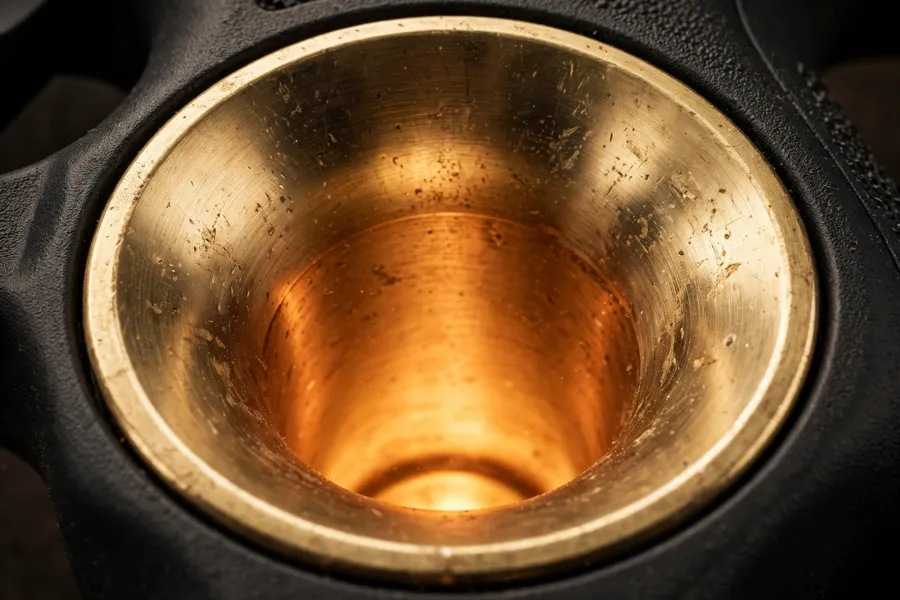
His most famous single part is the Chen Magwell Gen2: the magazine well and mainspring housing machined as one integral piece, on a shortened frame with the pin relocated — no weld, no screws, and, the trick of it, no added grip length or width. A funnel that makes the gun no bigger. It is patented, fitted by authorized installers, and used far beyond Chen's own guns.