Long Range: Four Figures of Distance, Zero Shortcuts
Bolt guns, big glass and desert wind — the rifles, calibers and skills that stretch past 1,000 yards.
Long-range shooting is the most honest discipline in the gun world, because physics grades every shot and keeps the receipts. Past a few hundred yards, nothing is free: the wind you cannot see moves the bullet you cannot steer, the mirage lies to you through the best glass money can buy, and the math — all of it, every time — has to be done before the trigger moves, by you.
It is also, not coincidentally, the most peaceful. A long-range session has the tempo of astronomy: long stretches of observation, calculation and stillness, punctuated by a few seconds of consequence and a long, hopeful wait for the sound of steel to come back across the canyon.
The rifle is the easy part
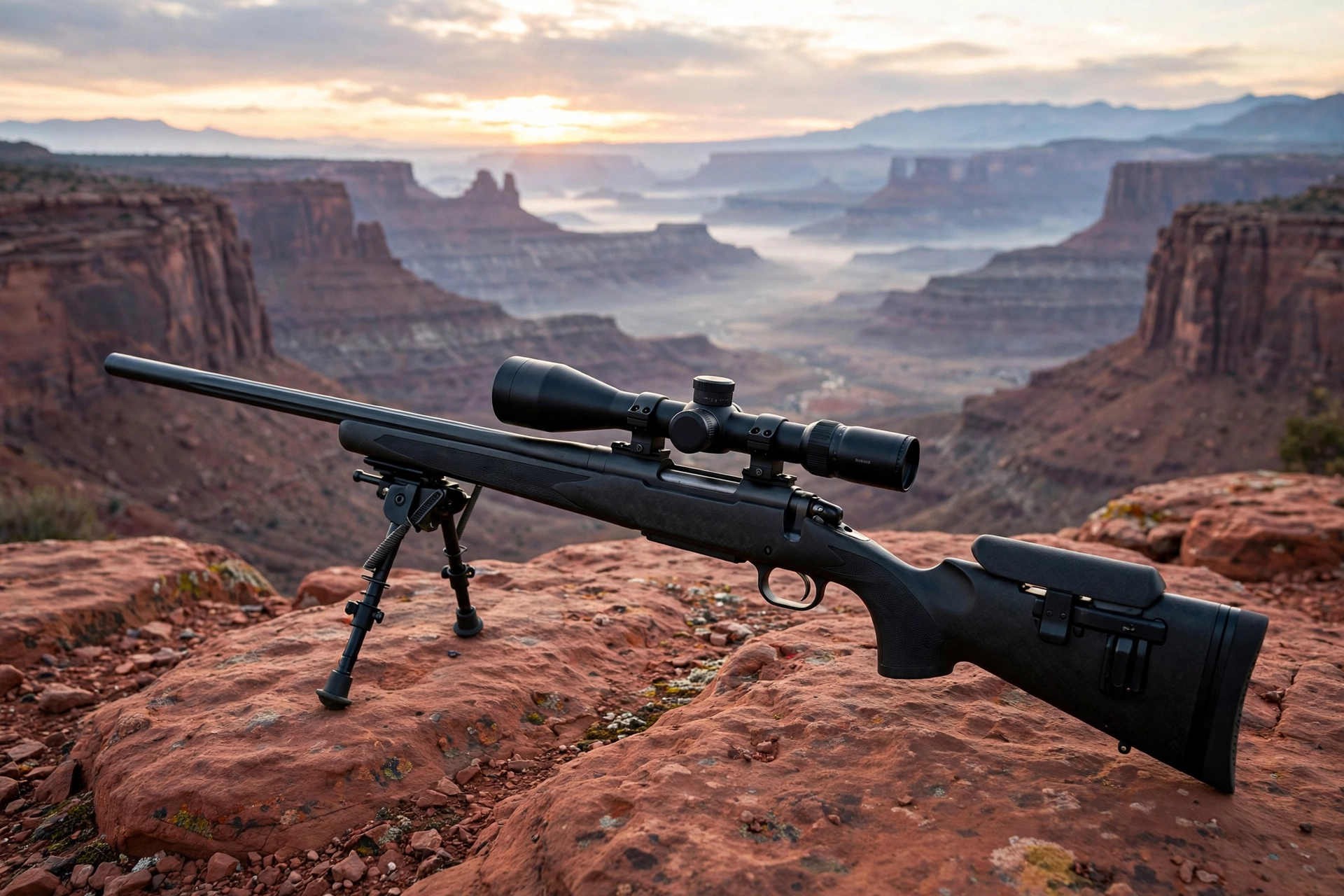
Modern precision rifles are astonishingly capable out of the box, which is precisely the trap. The rifle is a solved problem compared to the shooter: reading wind, managing recoil so you can watch your own shot, building a position that does not collapse on the third round. Our long-range desk covers the gear — bolt guns, optics, calibers, chronographs — but it covers them in that order of importance: skill first, glass second, rifle third, and everything else after.
Why the desert
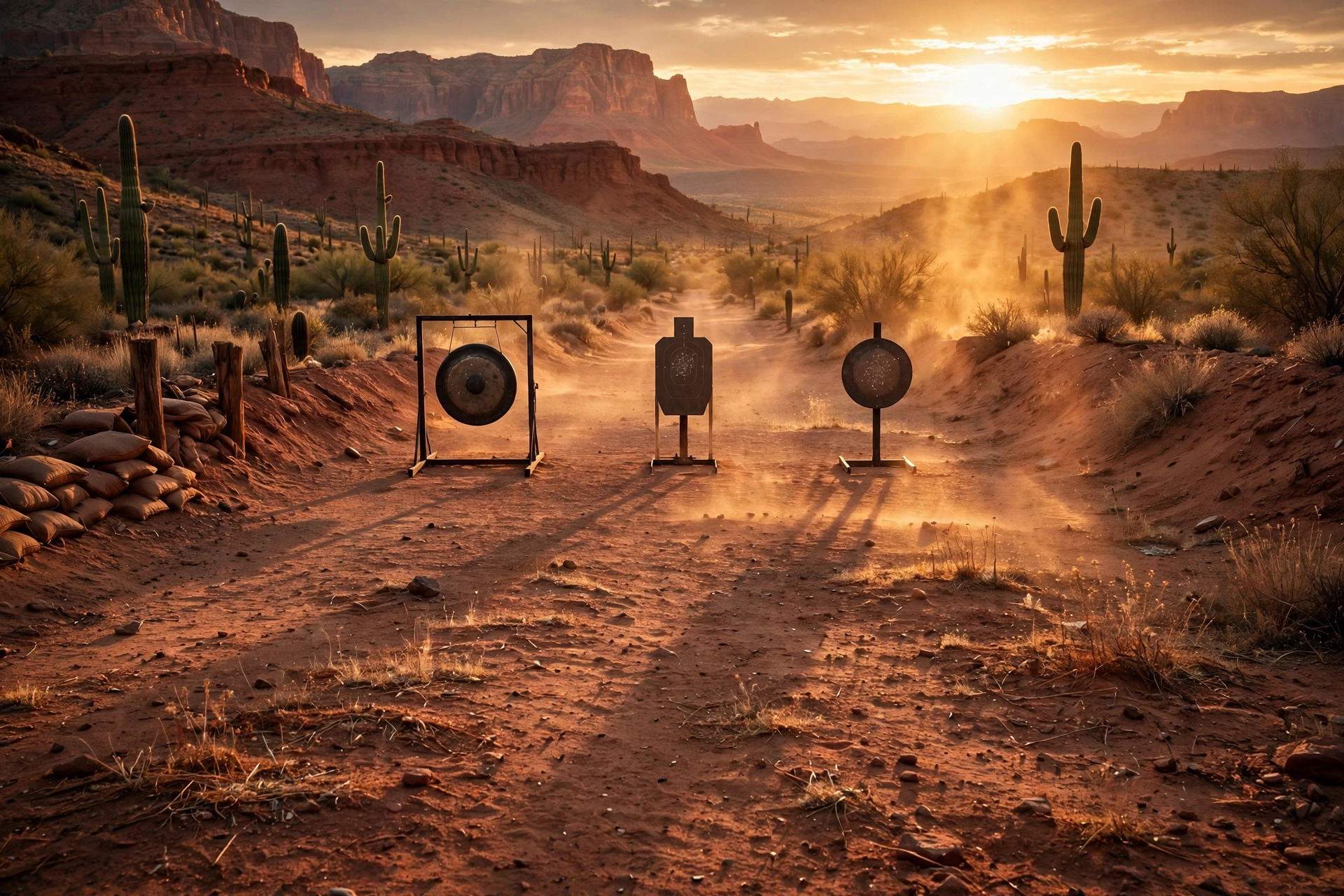
Big country is the natural classroom. The same red-rock distances that define our look define the discipline: targets you can barely see, wind that changes its mind between ridges, light that turns mirage into a second language. Learn to shoot long there, and every other range in America feels like a short conversation.