America's Rifle, Explained
How the AR became the country's rifle — builds, calibers, and why every shooter ends up owning one.
Start with a simple observation: no other country on earth has a rifle that functions as a shared language. The AR-15 is that language in America. A rancher in the panhandle, a competitive shooter in Arizona, a new gun owner at a suburban range and a veteran at a workbench are all, in a meaningful sense, speaking about the same machine — and can trade parts, knowledge and opinions across any distance because of it. That is what it means to say the AR became the country's rifle. Not that everyone owns one, but that everyone in gun culture can read one.
The design's journey explains its grammar. Born in the late 1950s as a lightweight military rifle, the AR pattern spent decades as a niche sporting arm before a genuine Cambrian explosion of makers, parts and ideas turned it into a platform — a word that matters. A platform is not a product. It is an agreement about interfaces, and agreements are what let a thousand small companies and a million home builders all contribute to the same evolving machine.
The build is the point
Ask AR owners about their rifles and most will not describe a purchase; they will describe a process. A lower built on a winter evening. An upper chosen for a purpose. A trigger that replaced the one that came in the box, which replaced the idea that the box knew best. The country's rifle is the country's rifle partly because so much of it is quite literally made by the country — assembled at kitchen tables and workbenches into configurations no factory ever catalogued.
That authorship creates a kind of literacy. AR owners tend to know their rifles mechanically the way earlier generations knew their trucks: which part does what, what wears first, what a change will do before it's made. A gun culture that can maintain its own equipment is a different — and more durable — thing than a gun culture that can only buy it.
Why every shooter ends up owning one
The punchline our America's Rifle desk hears constantly is that resistance is temporary. The revolver devotee buys one for the ranch. The precision shooter builds one for practice economy. The hunter discovers the modern sporting rifle is, in fact, superbly suited to the work. The platform's virtues — light weight, mild recoil, endless configuration, deep parts support in every town in America — keep making the same argument to different people until the argument wins.
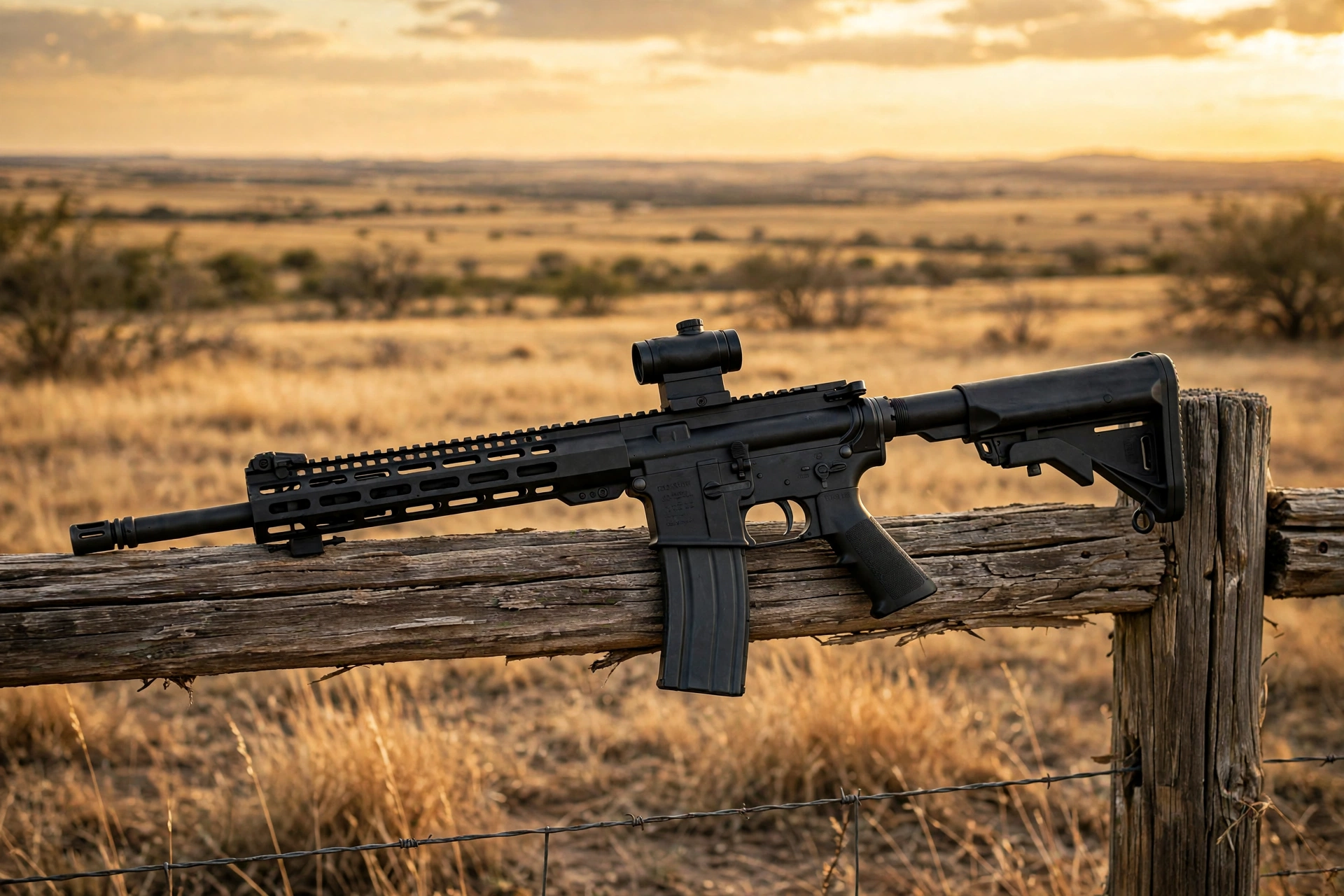
None of this requires exaggeration, and the AR's story is better without it. It is not a symbol first and a rifle second; it is a rifle first — a genuinely excellent, adaptable, maintainable rifle — whose excellence made it a symbol. Symbols imposed from outside fade. Symbols earned at the bench and the fence line compound. That is how a rifle becomes a country's rifle, and why it is likely to remain one.